
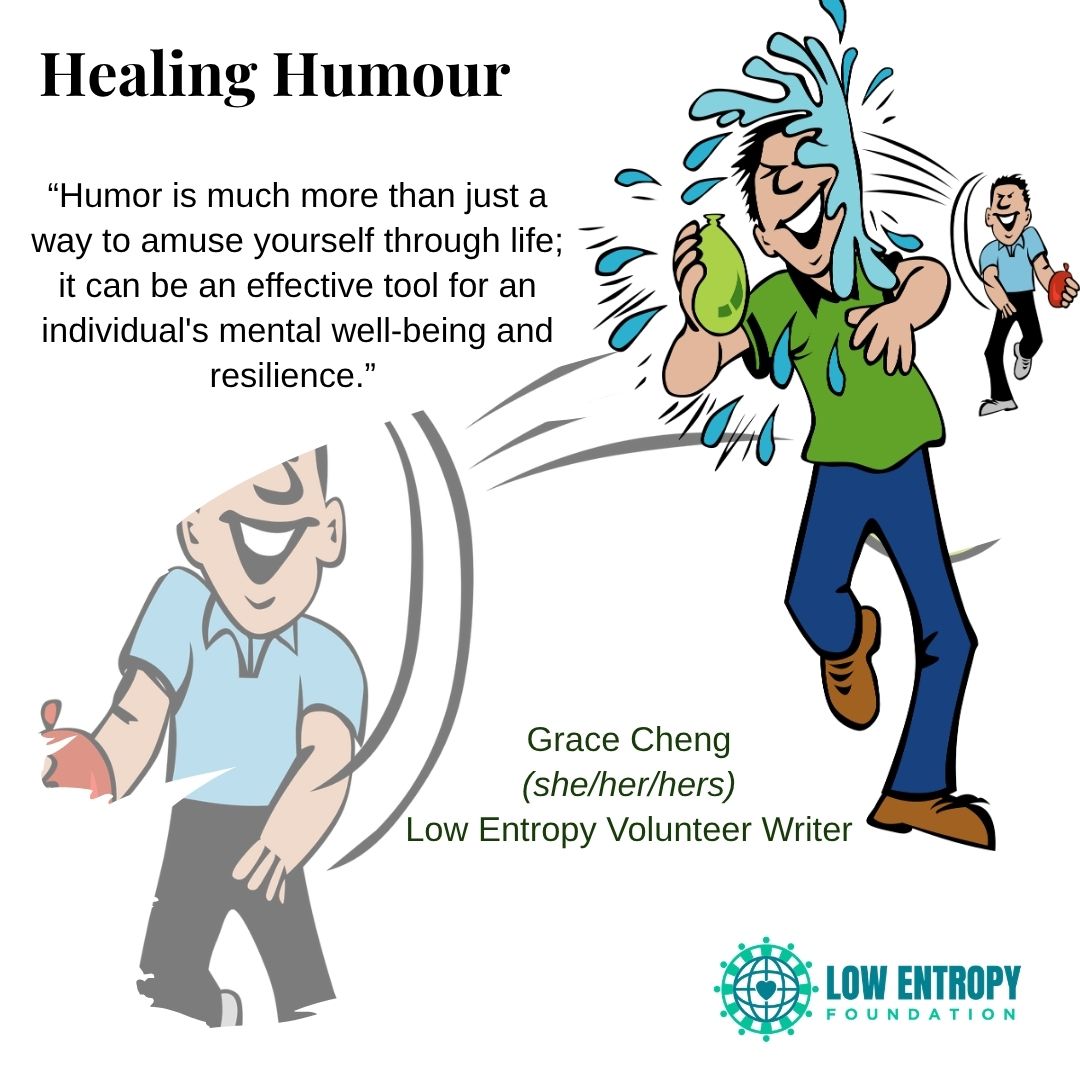
Grace Cheng (she/her/hers), Low Entropy Volunteer Writer
Humor has long been a fundamental part of the human experience, serving as a means of association, an adapting instrument and a catalyst for the flourishing of people within misfortune. In recent times, the restorative use of humor has been gaining increasing traction within mental health settings and from individuals alike, as the beneficial effects of laughter are being harnessed and put into use as a powerful tool for healing. This article will explore the various ways in which humor can be used therapeutically, as well as the science that makes it such an effective healing agent and the practical approaches you can integrate to have more laughter in your day.
Why Humor is Treatment
At the very heart of it, humor acts as a way to reframe an individual’s issues, thereby reducing the severity and significance with which they appear, providing a much-needed dose of perspective. When you laugh, your body produces endorphins, a natural pain reliever that induces joy. Laughter also reduces cortisol and adrenaline levels, which in turn helps to alleviate stress on the body and even decrease blood pressure. It is these combined effects that create feelings of well-being and positivity that help you overcome your challenges with increased resilience. Furthermore, humor is an excellent tool to strengthen and build relationships with those around you. It is the simplest way to break down barriers and can quickly build a trusting and bonding environment between individuals. For those people struggling with anxiety, pain or sadness, connection on this deep level can be incredibly effective for healing.
The Science Behind Humor and Healing
Research has consistently shown that humor can alleviate a variety of mental distress symptoms. Studies have been conducted on individuals with symptoms of depression and anxiety, and of all those studied, the ones with the most humor in their lives reported significantly lower levels of depression and anxiety symptoms, even reporting that they had stronger immune systems than the non-humor-inclined test subjects. Therapists can use humor to help clients understand their challenging issues from more rational perspectives and allow themselves to deal with issues from a healthier standpoint. One specific way cognitive behavioral therapists help clients work through negative beliefs about themselves and others is by encouraging them to find the humor in what the thought is conveying to the client, to playfully joke with it. This not only lightens the mood, but allows clients to work through the problem easier, with the ability to look at the challenge and not take the belief so seriously.
Types of Helpful Humor
Not all humor serves the purpose of healing or treatment, and it is important to be aware of what kind of humor is effective in certain situations. The most effective type of humor is one that promotes unity between individuals (affiliative humor), while self-deprecating humor that puts the individual in a negative light should be avoided. There is also self-enhancing humor, where the individuals can be entertained by their own mistakes, but not put themselves down over the experience.
Effective Ways to Use Humor as Treatment
1. Humor Journal: Spend a few minutes each day writing down the funny events that happen to get your mind working towards noticing humor.
2. Seek Comedy: Engage yourself with funny movies, TV shows and comedians to experience how contagious laughter can be.
3. Share Jokes with Friends: Discuss with friends things that amuse you and learn about their favorite comedians as you form a connection through shared laughter and joy.
4. Reframing: Ask yourself if something will be humorous when you reflect on it. Would a comedian find this situation or incident amusing?
5. Laughter Yoga: Get involved in a laughter yoga session, a form of therapy that combines breathing and movement with laughter, thus encouraging you to feel more energized and happier faster than traditional therapy.
6. Using Humor for Self-Talk: Learn to laugh at yourself and your experiences by using silly or amusing phrases to respond to something negative. When you spill coffee on yourself, instead of scolding yourself, imagine you have just created a new fashion trend!
When to Be Cautious
Although humor can be extremely beneficial to treatment, there are certain situations in which caution should be taken when using humor as a therapeutic tool. Make sure to avoid humor that can be deemed hurtful or disparaging towards another individual’s experiences and feelings. Some people who are currently coping with immense pain or trauma may not be ready to use humor to combat their pain; allow those individuals to work through their emotional hurdles without feeling the pressure to be cheerful if they are not ready. Let humor supplement, rather than replace genuine healing through understanding.
Conclusion
Humor is much more than just a way to amuse yourself through life; it can be an effective tool for an individual’s mental well-being and resilience. You have the ability to influence your state of mind, as well as the bonds you hold with others, by allowing yourself to laugh more freely and with intention. Whether you are dealing with small everyday events or have a larger crisis to navigate, the best remedy at your disposal may very well be laughter!
—
Grace has an accounting and finance background. She enjoys reading, writing, listening to music, watching movies and playing sports.