
Nirali Bhate, Low Entropy Volunteer Writer
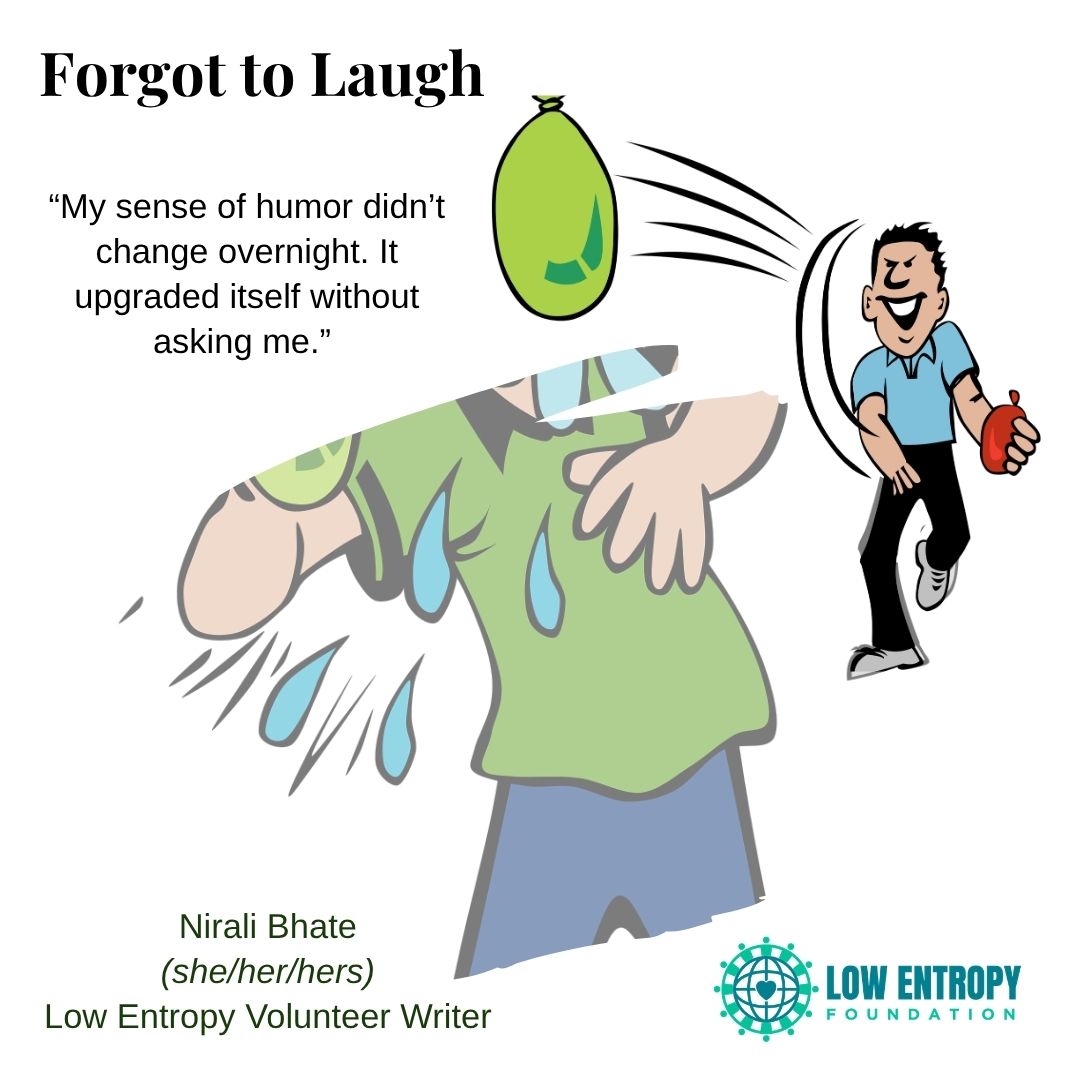
My sense of humor didn’t change overnight. It upgraded itself without asking me. And somewhere along the way, I lost the “laugh instantly” feature.
When I was five, my entire understanding of humor came from Tom and Jerry. That was it. That was the gold standard.
A cat chasing a mouse, slipping on a banana peel, getting hit with a pan, pure comedy. No questions asked. No thinking required. If someone fell, I laughed. If something exploded, I laughed harder. Honestly, it was a very efficient system.
Back then, humor didn’t need context, timing or emotional intelligence. It just needed chaos.
And I was fully subscribed to it.
Then came the upgrade.
Somewhere along the way, I discovered The Suite Life of Zack & Cody. And suddenly, humor wasn’t just about what happened, it was about how and why it happened.
Now there were dialogues. Sarcasm. Awkward situations. Characters with personalities. I started noticing expressions, timing and those moments where you don’t laugh immediately . . . you process, and then you laugh.
It felt like my brain had been given a new feature: understand before laughing.
And honestly, that’s where things started getting complicated.
Because as I grew older, my sense of humor didn’t just change, it kept updating. Like a software upgrade that I never manually installed.
Version 1.0: Laugh at everything.
Version 2.0: Laugh at smart jokes.
Version 3.0: Think before laughing.
Version 4.0: Overthink . . . and sometimes forget to laugh.
Each version came with its own pros and cons. I gained awareness, but I lost a little bit of that carefree laughter. I became more thoughtful, but also slightly more . . . selective.
Somewhere in between, I realized something important: humor is not just personal, it’s deeply influenced by everything around us.
The culture we grow up in.
The shows we watch.
The people we spend time with.
What’s funny to one person might be confusing or even offensive to someone else.
And then I came across a study in Current Psychology that made everything make even more sense. It broke humor into four types:
There’s self-enhancing humor, the kind where you laugh at your own life in a healthy way. Like when everything goes wrong, and you just say, “Wow, this is actually funny now.”
Then there’s affiliative humor, the wholesome kind. The jokes that bring people together, make conversations lighter and don’t hurt anyone.
Then comes self-defeating humor, when we joke about ourselves just to fit in or avoid awkwardness (we’ve all been there. Some of us live there).
And finally, aggressive humor, the sarcastic, teasing kind that can sometimes cross the line without us even realizing it.
The interesting part? We don’t stick to just one type. We move between them. We evolve.
Which explains why five-year-old me found a frying pan to the head hilarious, and present-day me sometimes pauses and thinks, “Should I laugh at this . . . or analyze it first?”
And then there’s today’s reality.
We now have stand-up comedians from all kinds of backgrounds, each bringing their own experiences and perspectives. And not every joke lands the same way for everyone. One person laughs, another person overthinks and a third person is mildly offended.
Same joke. Different reactions.
And let’s be honest, good humor today often comes with a price tag. Streaming subscriptions, comedy shows, live events . . . it almost feels like we’re paying to laugh better.
Which is ironic, because some of our best laughs as kids were completely free.
But maybe that’s the point.
Maybe humor was never meant to stay the same. Maybe it was always meant to grow with us, becoming more layered, more thoughtful and yes, sometimes a little more complicated.
From laughing at chaos to understanding context, my sense of humor didn’t just grow, it grew up with me.
—
Leave your thoughts for Nirali in the comments below. You can also follow us on Facebook, Instagram, TikTok, Twitter and YouTube to stay up-to-date with Low Entropy news!