
Pallavi Paul, Low Entropy Volunteer Writer
We often think changing our eating habits requires a complete transformation, following strict diets or never touching food that we used to love the most. For me, it wasn’t about giving up my favourite foods overnight. It was about changing my relationship with them.
One food habit I’ve been trying to change since childhood is my love for chips. If you put a packet of chips in front of me, there’s a very high chance I’ll still be excited. In fact, I would honestly say I was addicted to chips growing up. A single packet of Lay’s could disappear in one sitting without me even realising it. It was my go-to afternoon snack, whether I was studying, watching television or simply feeling bored. The funny thing is that I never questioned it. It was just part of my routine.
As I’ve grown older, however, I’ve become much more conscious about what I eat. Instead of looking only at the calories, I began reading nutrition labels. I paid attention to the saturated fat content, sodium levels, sugar levels, fibre and ingredient lists. That simple habit of flipping the packet over before buying it completely changed the way I looked at food. Interestingly, I didn’t stop buying chips altogether.
That might surprise people because many conversations around healthy eating make it seem like success only comes from eliminating your favourite foods. My experience has been different. Rather than banning chips from my life, I focused on reducing how often I ate them.
What used to be a weekly purchase slowly became a once-a-month purchase.
That may not sound dramatic, but for someone who genuinely loves chips, it is a significant shift.
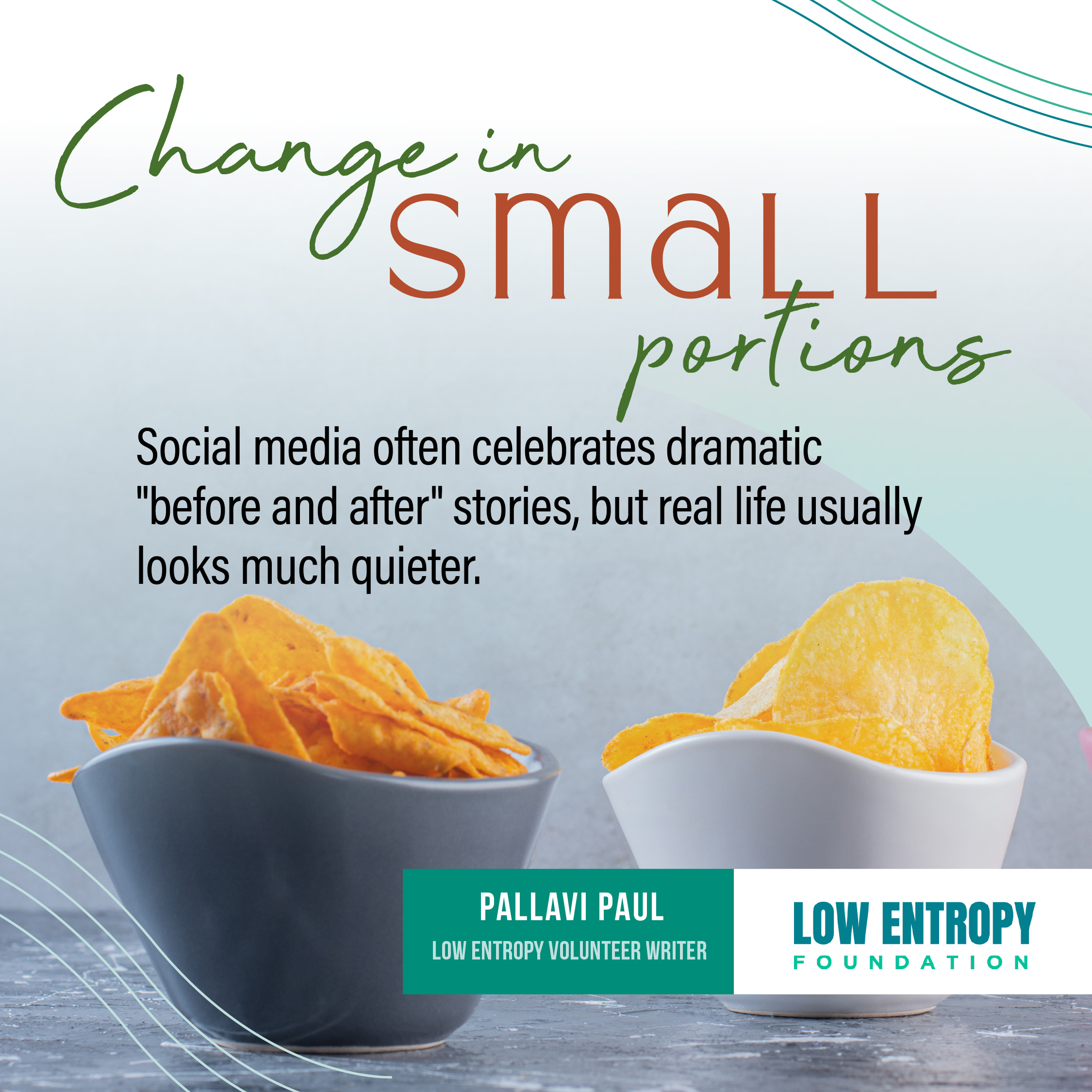
Another small change made a surprisingly big difference. I stopped eating directly from the packet. Instead, I pour a small portion into a bowl before I start eating. It’s a simple habit inspired by the smaller serving style common in many Asian households, where food is often served in small bowls rather than eating from one big bowl.
This tiny change helps me become more mindful. Once the bowl is empty, I naturally pause and ask myself whether I’m actually still hungry, or if I’m simply eating because the packet is still sitting beside me. More often than not, I realise the small portion was enough.
Today, one packet of chips can last me nearly three weeks. If someone had told my younger self that this would happen, I probably wouldn’t have believed them.
Another food habit I’ve been struggling to change is my love for instant noodles.
If my fridge is empty, my first instinct is almost always to reach for a packet of noodles. They are quick, comforting, affordable and incredibly satisfying after a long day. I don’t think I’m alone in this. Instant noodles have become a comfort food for many people because they require almost no effort and deliver instant gratification.
The challenge is that convenience can easily become a habit.
Whenever I felt tired or didn’t want to cook, noodles became the easiest solution. Over time, I realised they were not the healthiest option; even if I added vegetables to them, I was choosing them because they were convenient. Changing that habit has been much harder than I expected.
Instead of promising myself that I’d never eat noodles again, I set a more realistic goal. I now try to have them only once every three weeks or even once a month. Most of the time I control my temptations, but sometimes I don’t. But the overall pattern has improved, and that’s what matters most.
One lesson I’ve learned throughout this journey is that sustainable change rarely comes from perfection. It comes from consistency.
Social media often celebrates dramatic “before and after” stories, but real life usually looks much quieter. It’s choosing the smaller bowl instead of eating from the packet. It’s reading the nutrition label before placing an item in the shopping cart. It’s deciding not to buy chips every grocery trip. These are tiny decisions that don’t feel life-changing in the moment, but slowly reshape our habits over time.
I’ve also learned that restricting foods too aggressively can sometimes have the opposite effect. The more I told myself, “I can never eat chips again,” the more I thought about them. Giving myself permission to enjoy them occasionally actually reduced the guilt and made moderation easier.
That doesn’t mean I eat perfectly every day. There are still afternoons when I crave salty snacks, or evenings when instant noodles sound much more appealing than cooking a balanced meal. The difference now is that I’m making those choices consciously instead of automatically.
For me, healthy eating isn’t about creating rules that make life miserable. It’s about building habits that I can realistically maintain for years. If that means enjoying chips once a month instead of every week, or eating noodles occasionally instead of relying on them whenever I’m hungry, that’s progress worth celebrating.
Looking back, I realize the biggest change wasn’t in my pantry, it was in my mindset. I stopped chasing perfection and started focusing on awareness. I no longer see food as something to control or fear. Instead, I see every meal and snack as another opportunity to make a slightly better choice than I did yesterday.
Maybe that’s what lasting change really looks like. Not eliminating the foods we love, but learning to enjoy them in a way that supports both our happiness and our health.
—
Leave your thoughts for Pallavi in the comments below. You can also follow us on Facebook, Instagram, TikTok, Twitter and YouTube to stay up-to-date with Low Entropy news!
Hi Pallavi,
I loved this article as I related to it so well. Keep writing !
Regards,
Diny