Estefania Caceres (she/her/hers), Low Entropy Volunteer Writer
This article was composed with the assistance of artificial intelligence
To grow up in a Dominican and Latin American household is to learn a very specific language—the language of love. It is a dialect spoken through open doors, plates of food handed to neighbors, fierce family loyalty and a warmth that can light up any room. We pride ourselves on this radical hospitality. Yet, as a Dominican, I had to learn early on that our culture simultaneously speaks a second, harsher language: the language of discrimination against the 2SLGBTQIA+ community.
This duality is painful. The same culture that wraps you in a tight embrace can instantly freeze you out if you do not fit its rigid expectations. This discrimination rarely stems from pure malice; instead, it is fueled by a powerful triad of fear, an unyielding grip on tradition and a profound lack of knowledge.
It creates a silence born out of fear. Families worry about societal judgment, religious excommunication or the loss of status within the community. They cling to ancient traditions and rigid gender roles—machismo and marianismo—because they mistake familiarity for safety. Compounding this is a lack of real empathy, the kind that requires you to actively step outside of your own comfort zone to understand a reality different from your own. True empathy cannot coexist with a demand that someone hide who they are just to keep the peace.
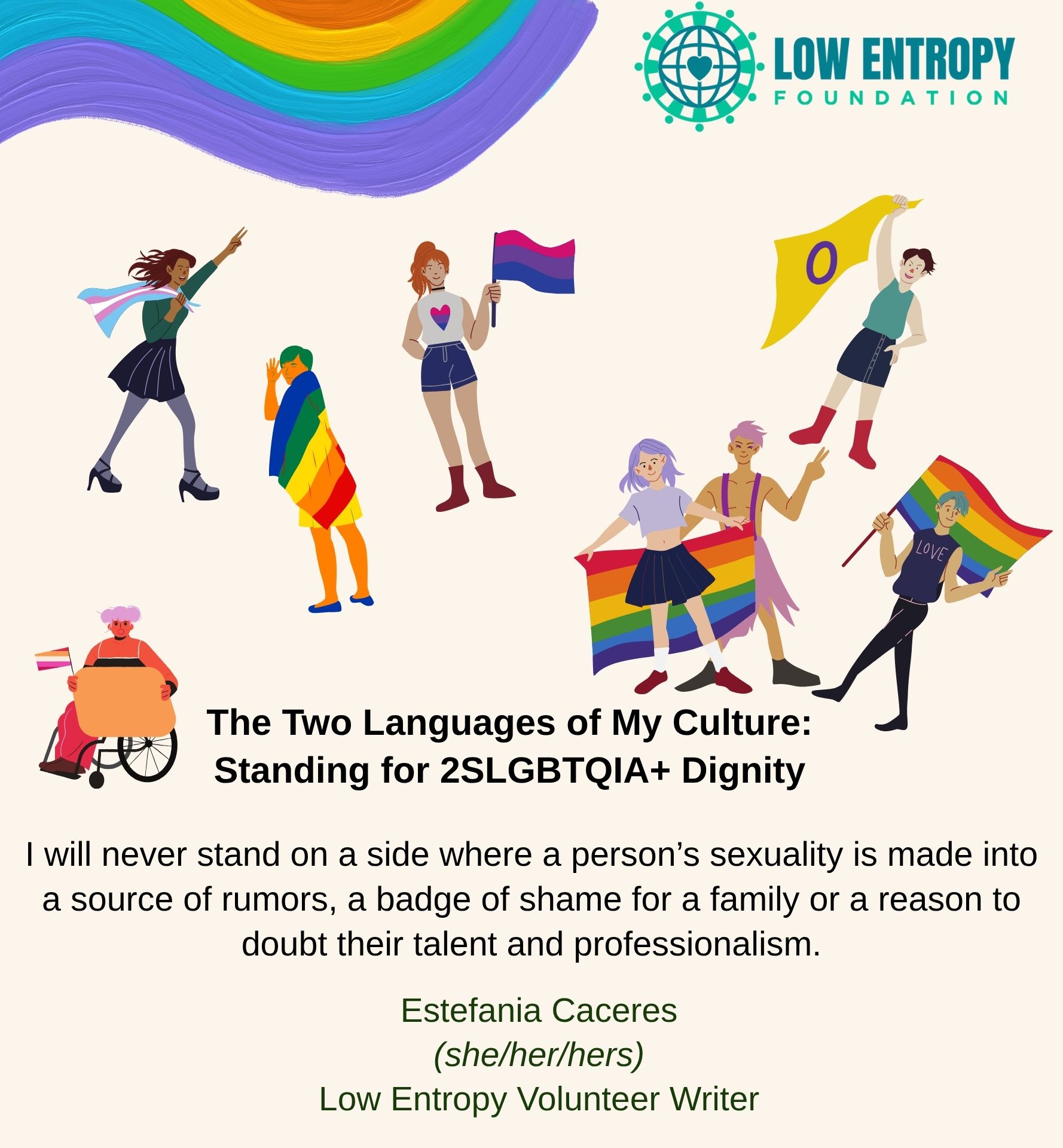
Growing up, I got so tired of hearing adults huddle together to whisper gossip: “La hija de fulano es lesbiana” (The daughter of so-and-so is a lesbian) or “Bueno, le salió gay el muchacho” (Well, the boy turned out to be gay). It baffled me that people were vastly more preoccupied with a young woman’s or young man’s private life than they were with the corrupted politics destroying our society. I realized then that I could never align myself with a mindset like that. I will never stand on a side where a person’s sexuality is made into a source of rumors, a badge of shame for a family or a reason to doubt their talent and professionalism.
That is why, even before I moved out of the Dominican Republic, I chose exactly where to stand. I chose to stand compassionately with the 2SLGBTQIA+ community.
My ability to take this stand is rooted in the very culture people use to justify exclusion. I was fortunate to grow up in a household that modeled a different version of our heritage. My family taught me that la familia means respect and love, no matter what. Even when they did not fully understand or completely agree with someone’s reality, they tried their absolute best to welcome everyone with genuine warmth. They showed me that true Dominican hospitality doesn’t come with conditions or fine print.
Now, living in and being a citizen of another country with a completely different culture, my perspective has widened, but the underlying truth remains. I can say with sadness that discrimination is not unique to my homeland; it still exists in most cultures around the world. Every society has its beautiful values to champion, but every society also has deep-seated traditions that desperately need to change because they simply do not align with the basic respect, dignity and love that all individuals deserve.
Dissenting against cultural bias is not a rejection of my roots; it is the ultimate act of love for humanity. If we truly brag about the warmth, solidarity and love of our communities, we must extend that language to our queer siblings, children and friends. This Pride Month, my stance remains unchanged, no matter what border I cross: we must dismantle the fear and the silence, ensuring that no one is ever made to feel like an exile in their own culture.
—
Estefania Caceres is a Dominican-Canadian writer living in Canada with a professional background in telecom and project management. She has been writing for as long as she can remember in her native language, Spanish. She is now writing more actively again, exploring English and even Spanglish (Spanish and English) and is a loving mom and wife who enjoys supporting others in many ways and is always happy to help.